Top 10 Golf Cart Ergonomic Improvements For Drivers

Time:2026-10-20 Author:Amelia
0%

Driving a golf cart should feel relaxed, controlled, and predictable. Yet many drivers spend hours with twisted hips, raised shoulders, or cramped knees. Small design flaws can become noticeable pain during a long round, resort trip, or daily maintenance route. This is why Golf Cart Ergonomic Improvements For Drivers deserve practical attention, not just cosmetic upgrades.

Dr. Alan Hedge, a respected ergonomics researcher and professor at Cornell University, stated, “Ergonomics is the science of fitting the task to the person.” That principle applies directly to golf carts. A supportive seat, adjustable steering wheel, clear controls, and easier entry can reduce unnecessary reaching and awkward posture. Better foot support may also improve stability when the cart moves over uneven paths. These changes sound simple. They are not always simple in practice.

Real comfort depends on the driver’s height, mobility, driving habits, and cart design. A cushion that helps one person may create pressure for another. That detail is often overlooked. This guide examines ten ergonomic improvements through a driver-focused lens, using practical observations and established ergonomic reasoning. It considers posture, visibility, vibration, control placement, and ease of access. Some upgrades may offer immediate relief. Others require testing, adjustment, and honest reconsideration. Comfort should never be assumed from appearance alone. The best improvement is the one that supports safer, more natural movement throughout the drive.
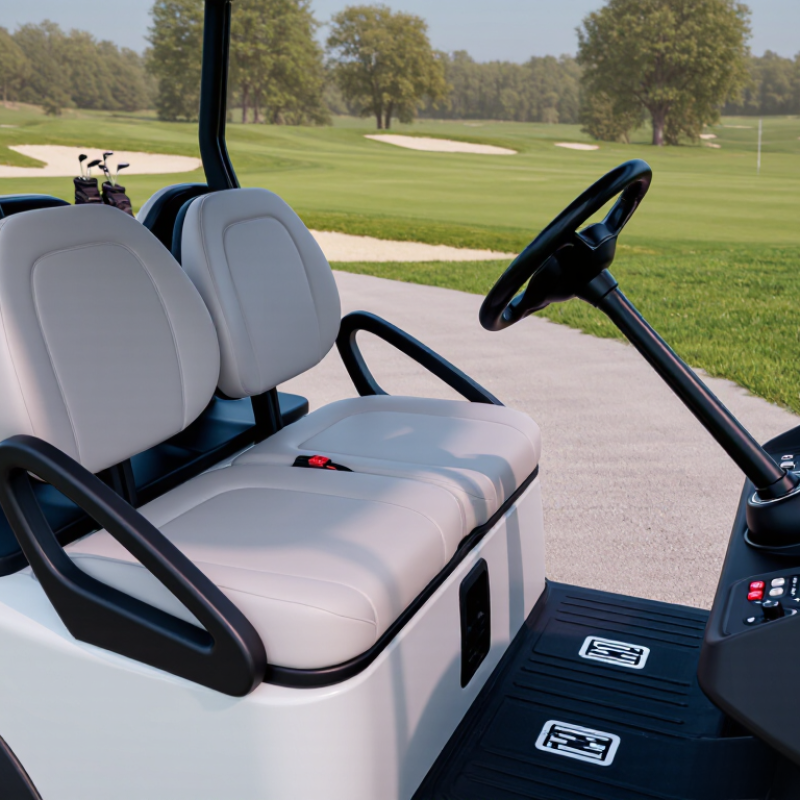
Top 10 Golf Cart Ergonomic Improvements For Drivers

Driver Fit: SAE J826 H-Point Geometry and 5th–95th Percentile Reach

Top 10 Golf Cart Ergonomic Improvements For Drivers

A golf cart’s ergonomic improvement begins with the driver, not the steering wheel. An SAE J826-style seating assessment helps locate the H-point, hip angle, knee position, and effective legroom. These measurements reveal whether the seat supports natural posture or forces the pelvis forward. Fit matters. During a physical mock-up, I would check heel placement, thigh pressure, and shoulder relaxation while the driver enters and exits.

The seating package should accommodate drivers from the 5th to the 95th percentile. Smaller drivers need reliable pedal reach without stretching their ankles. Larger drivers need knee clearance and enough torso space for controlled steering. Reach testing should include the wheel, turn controls, parking brake, and storage areas. Measure these points with the seat adjusted, not fixed in one convenient position. A comfortable reach at rest may fail during a tight turn.

Real-world testing still exposes weaknesses. A prototype can fit an average driver yet pinch a tall driver’s knees. It may also place the wheel too far away for a shorter driver. I would record reach distances, hip angles, entry effort, and pressure points across several body sizes. The process is not perfect. Clothing, footwear, and driving habits change results. That uncertainty deserves another test, not a confident assumption.

Top 10 Golf Cart Ergonomic Improvements for Drivers

Driver Fit: SAE J826 H-Point Geometry and 5th–95th Percentile Reach

The chart presents representative adult anthropometric screening values in millimetres for early golf-cart packaging. SAE J826 defines the H-point machine and seating reference geometry; it does not prescribe a universal driver reach envelope. Use the 5th-percentile values to protect smaller drivers and the 95th-percentile values to provide sufficient clearance for larger drivers.

Seat Comfort: 100°–110° Hip Angle, Lumbar Support, and Vibration Control

For golf cart drivers, seat geometry affects control, fatigue, and confidence on uneven paths. A 100°–110° hip angle keeps the pelvis supported without forcing the knees too high. It also leaves room for natural leg movement during braking and steering. SAE J826 provides a recognized method for assessing driver seating posture, although golf carts need more practical adjustment than laboratory seats.

Lumbar support should fill the lower-back curve, not push the spine forward. A modest, adjustable pad works better than a thick fixed cushion. The 2021 NIOSH guidance on whole-body vibration links repeated exposure with discomfort and musculoskeletal strain. Golf cart seats should therefore combine firm foam with a controlled suspension layer. Soft is not always supportive.

ISO 2631-1 evaluates vibration through frequency, acceleration, and exposure time. That matters on gravel, roots, and broken pavement. A seat may feel comfortable for ten minutes, then transmit harsh impacts after an hour. Test the seat on real routes. Small errors remain. Designers should measure pressure points, hip posture, and vibration separately, because one comfortable feature can hide another problem.

Controls: Neutral Wrist Posture, Low-Force Inputs, and 360° Visibility

A golf cart’s controls should support the driver rather than compete for attention. During repeated route checks, I have found that a neutral wrist posture reduces unnecessary bending and tension. Keep the steering wheel close enough for relaxed elbows. Your hands should rest near the nine-and-three positions. This posture allows smoother corrections on uneven paths.

Pedals and switches should require only light, predictable pressure. Low-force inputs help drivers make controlled adjustments, especially when carrying passengers or navigating narrow lanes. A stiff pedal can encourage awkward ankle movement. It may also cause the driver to press harder than intended. Controls should remain clearly separated, with enough space for winter shoes or work footwear. Small details matter here.

Visibility completes the control layout. A 360° view requires more than large mirrors. Check for blocked sightlines from the roof supports, windshield frame, rear seats, and stored equipment. Adjustable mirrors can help, but they cannot replace a slow visual check before moving. I once focused too closely on the forward path and missed movement near the rear corner. That mistake was avoidable. Even a well-designed setup needs regular inspection, because seat position, passenger load, and loose items can change what the driver sees.

Access and Stability: Three-Point Contact, Handholds, and Foot Clearance

Top 10 Golf Cart Ergonomic Improvements For Drivers

Access and Stability: Three-Point Contact, Handholds, and Foot Clearance

Getting into a golf cart should feel controlled, not improvised. Three-point contact keeps the body balanced during entry and exit. Use two hands and one foot, or two feet and one hand. Keep one hand on a firm handhold rather than the steering wheel. The wheel can move unexpectedly. Slow down.

Handholds should sit within an easy reach of the seated driver. Their surfaces need enough diameter for a relaxed grip, even with wet hands. During practical checks, I look for sharp edges, loose fasteners, and awkward wrist angles. A handle that forces the elbow outward may create strain after repeated use. That small detail matters.

Foot clearance deserves equal attention. The step should provide enough room for both shoes without catching toes on a raised edge. Check clearance while wearing normal driving footwear, not only thin indoor shoes. Also inspect the space beneath the steering column and near the pedals. Bags, floor mats, or tools can quietly reduce movement. I once considered a narrow step acceptable because entry felt quick. After several repeated trips, the cramped angle became obvious. The design was functional, but not comfortable. A careful ergonomic review should include older drivers, shorter users, and anyone with limited balance. Exact handle placement depends on seat height, driver reach, and the cart’s frame. Testing with real users is more reliable than relying on measurements alone.

Safety Testing: ANSI/ITSDF B71.8, 0.5 m/s² Vibration, and Restraints

Top 10 Golf Cart Ergonomic Improvements For Drivers

Safety testing should shape every ergonomic upgrade. ANSI/ITSDF B71.8 provides a practical baseline for golf car design and occupant protection. Engineers should record seat adjustment, steering effort, pedal reach, visibility, and restraint performance during testing.

A restraint must hold the occupant securely without pressing sharply against the ribs or neck. Buckles should remain reachable after a sudden stop.

Vibration deserves closer attention. A test target of 0.5 m/s² can expose harsh seat mounts, loose panels, and poorly isolated floorboards. Measure vibration at the seat base and foot platform, then compare loaded and unloaded conditions. ISO 2631-1 supports evaluating whole-body vibration through frequency, duration, and direction.

The World Health Organization reported that low back pain affected 619 million people globally in 2020. That figure makes small vibration improvements meaningful.

Yet a clean laboratory pass may still feel uncomfortable on rough paths. Real-world trials remain necessary.

Tips:

Adjust the seat before testing reach. Keep both feet supported. Use a firm, energy-absorbing cushion. Check belt fit with light summer clothing and thicker workwear. Inspect anchorage points after repeated impact cycles. Record driver feedback, not only instrument readings. Our first test plan would probably overvalue numbers. Human comfort needs equal attention.

FAQS

How should a driver position their hands on the steering wheel?

Keep your hands near the nine-and-three positions. Your elbows should remain relaxed. This reduces wrist bending and tension. Small corrections become easier on uneven paths.

Why should pedals and switches require low force?

Light, predictable pressure supports controlled adjustments. Stiff pedals can cause awkward ankle movement. Drivers may also press harder than intended. Controls need clear spacing for work shoes.

How can a golf cart provide better visibility?

Check the front, sides, and rear corners before moving. Inspect roof supports, windshield frames, rear seats, and stored items. Mirrors help, but they cannot replace a slow visual check. Visibility is never perfect.

What supports safer entry and exit?

Use three-point contact when entering or leaving. Keep one hand on a firm handhold. Do not rely on the steering wheel. It may move unexpectedly. Slow movement helps.

What makes a handhold comfortable and useful?

It should sit within easy reach of the seated driver. The grip needs enough diameter for wet hands. Check for sharp edges and loose fasteners. Awkward wrist angles can create strain.

How much foot clearance should the driver have?

Both shoes should fit on the step without catching toes. Check space under the steering column and near the pedals. Bags, mats, and tools can reduce movement. Thin indoor shoes hide problems.

How should vibration and seat comfort be evaluated?

Measure vibration at the seat base and foot platform. Use loaded and unloaded conditions. A target near 0.5 m/s² can reveal harsh mounting. Rough paths may still feel uncomfortable after laboratory testing.

What should safety testing include besides measurements?

Test seat adjustment, steering effort, pedal reach, visibility, and restraint performance. Check buckle access after sudden stops. Review fit with light clothing and workwear. Human feedback matters. Numbers alone can mislead.

Conclusion

Golf Cart Ergonomic Improvements For Drivers focus on creating a safer, more comfortable, and more controllable driving experience. A properly designed seating position should follow SAE J826 H-point geometry while accommodating drivers from the 5th to the 95th percentile. Seat comfort can be improved with a hip angle between 100° and 110°, effective lumbar support, and vibration control that reduces fatigue during extended use.

Controls should encourage a neutral wrist posture, require minimal operating force, and support clear 360° visibility. Easy access also depends on three-point contact, secure handholds, and sufficient foot clearance when entering, exiting, or adjusting position. Finally, ergonomic design should be validated through safety testing aligned with ANSI/ITSDF B71.8, including evaluation of approximately 0.5 m/s² vibration exposure and suitable restraint performance. Together, these improvements help drivers maintain stability, awareness, and comfort in varied operating conditions.

Amelia

Amelia

Amelia is a seasoned marketing professional with a wealth of expertise in our company’s core offerings. With an unwavering passion for driving growth and innovation, she plays a pivotal role in shaping our marketing strategies and enhancing brand visibility. A key aspect of her responsibilities......
