Golf carts are a popular choice for short-distance travel, especially in resorts and golf courses. However, like any vehicle, they can experience various electrical problems. Understanding the "Common Golf Cart Electrical Issues and Solutions" is crucial for owners. A small issue can quickly become a significant inconvenience.
Many golfers rely on their carts for enjoyment and mobility. When the cart's battery fails or the wiring is faulty, frustration ensues. Common problems include flickering lights, unresponsive joyrides, and sluggish acceleration. These issues often arise from corroded connections or aged batteries. Addressing them promptly can save both time and money.
Being proactive is essential. Regular check-ups can prevent unexpected breakdowns. Learning about these common issues can empower owners. It allows them to troubleshoot problems effectively. With the right knowledge, golf cart enthusiasts can ensure their journeys remain smooth and enjoyable, avoiding unnecessary delays and repairs.
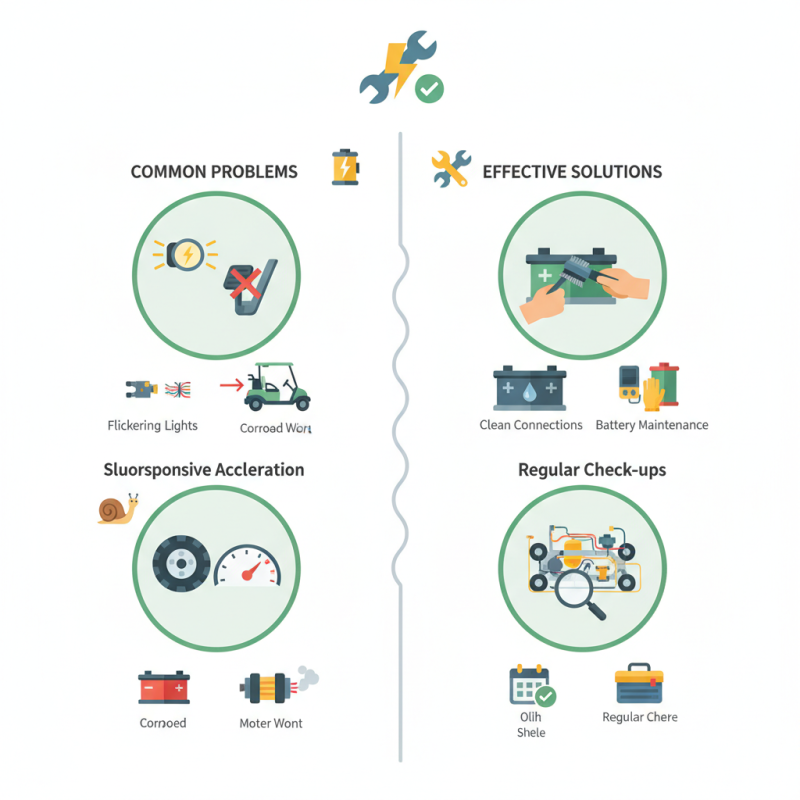
Golf carts are convenient for transportation, but they often face electrical issues. Common symptoms include flickering lights, slow acceleration, or a cart not starting at all. According to a survey from the Electric Vehicle Association, 30% of golf cart owners reported battery-related problems. Often, this points to poor connections or aging batteries.
Another frequent problem is a malfunctioning charger. A faulty charger can lead to under-charging, causing performance issues. Users frequently notice that the charger does not turn on or shows error lights. A study revealed that nearly 25% of golf cart failures are attributed to charger defects. Addressing these problems early can extend the life of the cart and improve reliability.
Lastly, solenoid and wiring failures can pose significant challenges. Wiring issues may cause intermittent power loss or complete failure. A report by the Golf Car Manufacturers Association highlighted that 15% of owners faced these wiring problems. Regular maintenance checks can help identify these issues before they escalate, ensuring a seamless golfing experience. It's essential to pay attention to these symptoms and take timely action.
| Problem | Symptoms | Possible Causes | Solutions |
|---|---|---|---|
| Battery Not Charging | Cart won’t start, dim lights | Faulty charger, dead battery | Check charger connections, replace batteries |
| Flickering Lights | Inconsistent lighting when driving | Loose connections, bad bulbs | Tighten connections, replace bulbs |
| No Power | Complete lack of response | Disconnected cables, blown fuse | Inspect cables, replace fuses |
| Speed Issues | Cart not reaching normal speed | Worn out motor, low battery charge | Test motor, charge or replace batteries |
| Overheating | Motor becomes too hot | Poor ventilation, overuse | Allow cooling, ensure proper airflow |
: Common issues include flickering lights, slow acceleration, or carts not starting. These can indicate battery or wiring problems.
Check for poor connections or aging batteries. Frequent performance issues often point to battery concerns.
A faulty charger may not turn on or may display error lights. This affects the cart's charging and performance.
Wiring is crucial. About 35% of electric cart issues arise from wiring problems, which can lead to power loss.
Begin by visually inspecting wires for frays or disconnections. Use a multimeter to identify voltage drops in the system.
Regular maintenance prolongs battery life. It includes checking water levels and cleaning terminals to avoid major failures.
Moisture and dirt can penetrate wiring, leading to malfunctions. Regular maintenance helps prevent these issues.
Check for corrosion, maintain electrolyte levels, and avoid overcharging to ensure batteries perform optimally.
Neglect can lead to costly repairs. A moment of care can improve your cart's reliability significantly.
Disconnect batteries for long storage periods. Extreme temperatures can affect performance, so keep them in a suitable environment.
This article addresses "Common Golf Cart Electrical Issues And Solutions," offering a thorough understanding of various electrical problems faced by golf cart users. It begins by outlining the typical symptoms associated with electrical failures, enabling owners to identify issues promptly. A crucial aspect covered is the role of batteries, as they significantly impact the overall performance and functionality of golf carts.
The article further delves into diagnosing and troubleshooting wiring problems, which are frequently encountered. Effective battery maintenance tips are provided to help extend battery life and reduce the likelihood of failures. Finally, practical solutions for addressing common electrical problems are presented, equipping readers with the knowledge needed to maintain and repair their golf carts efficiently.

 Mingni Golf Carts