Choosing safety features for a personal utility vehicle starts with how, where, and by whom it will be used. A compact electric cart moving tools across a warehouse needs different protection from a utility vehicle crossing uneven farm tracks. Yet both need predictable braking, stable handling, clear visibility, and restraints suited to their design. Small details matter. A seat belt that is difficult to reach may go unused. A bright headlamp can reveal a low obstacle before the front tires meet it.
Essential Safety Features For Personal Utility Vehicles should be judged as a connected system, not a checklist. Look for reliable brakes, rollover protection appropriate to the vehicle, occupant restraints, mirrors, lighting, and accessible emergency controls. Check tire condition and load limits, too. An overloaded cargo bed can change how the vehicle turns and stops. Ask whether guards, doors, or protective enclosures match the terrain and expected passenger use. Fit matters.
David Harkey, president of the Insurance Institute for Highway Safety, is a recognized vehicle-safety expert. A practical paraphrase of his safety-focused message is: “Protection depends on sound vehicle design and careful use.” This is a paraphrase, not a verbatim quotation. Buyers should verify each feature in the manufacturer’s documentation and inspect the vehicle in person. Sit in the driver’s seat. Test visibility, belt fit, and control reach. No feature removes every risk, and a polished brochure cannot prove real-world performance. That deserves a second look.
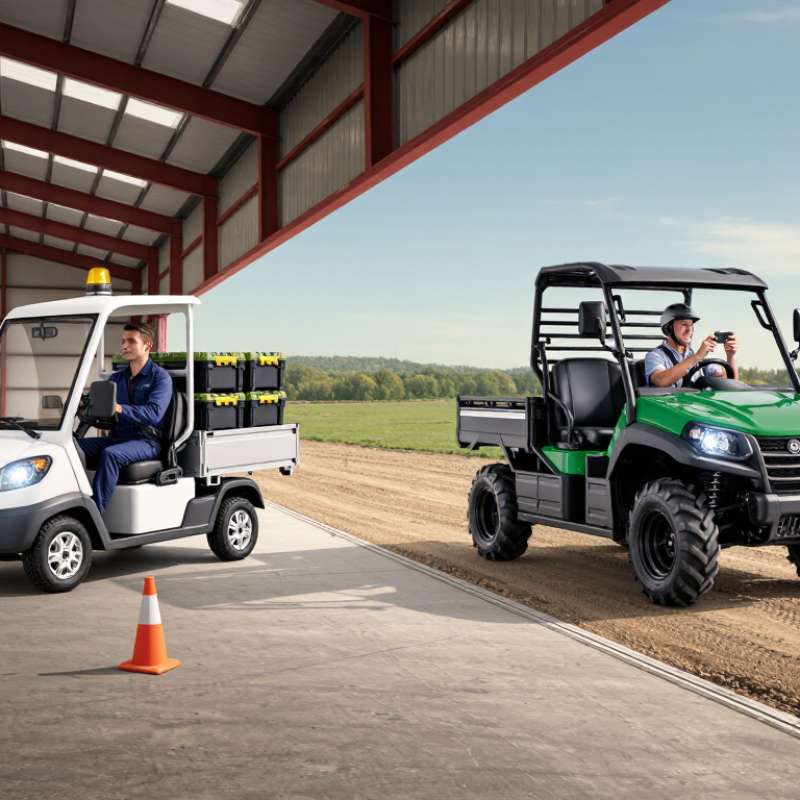
Before comparing safety features, identify the vehicle category: a golf cart, side-by-side utility vehicle, compact tractor, or low-speed road vehicle. They are not interchangeable. A cart carrying tools across a smooth campus has different needs from a side-by-side crossing muddy, uneven ground. Count passengers, estimate cargo weight, and note slopes, visibility, and typical travel speed. Small details matter. A steep loading ramp changes the risk.
The U.S. Consumer Product Safety Commission’s 2022 report estimated 104,000 emergency department-treated injuries involving all-terrain vehicles in 2022. That figure is not specific to every utility vehicle, but it shows why intended use deserves careful attention. For rough terrain, assess rollover protection, seat belts, handholds, and a stable stance. For work near pedestrians, consider speed control, clear sightlines, lights, and audible warnings. Check that the safety equipment suits the exact vehicle configuration, not just the model category.
Farm use needs a separate look. NIOSH’s report, Preventing Injuries and Deaths from Tractor Overturns, highlights rollover protective structures and seat belts as key protections on tractors. A tractor finding should not be applied automatically to a side-by-side. I would compare the manufacturer’s operating guidance with the actual route and load, then ask what happens if the ground turns slick. That question is easy to overlook. It should not be.
Start by mapping where the vehicle actually travels, not just where it is expected to travel. A gravel yard, wet grass, loading ramp, and narrow indoor aisle create different hazards. Note slopes, potholes, loose debris, standing water, low branches, and blind corners. Then consider who shares each route: pedestrians, cyclists, other vehicles, or workers carrying tools. Cargo or vehicle frames can block sightlines. Small details matter. Record typical loads, passenger numbers, travel speed, shift length, and whether work continues in rain, dusk, or cold weather. These conditions affect stability, stopping distance, traction, and operator fatigue.
Match safeguards to observed risks. Seat belts and rollover protection reduce injury risk when the vehicle is designed for them and occupants use them correctly. Select tires and braking systems suited to the surface and expected load, then check them regularly. Headlights, reflective markings, mirrors, and audible alerts can help at crossings, but they do not replace slower speeds or clear routes. For reversing, consider visibility aids and a spotter where appropriate. Keep loads low and secured, especially on slopes. Review the operator manual and ask a qualified technician to confirm compatibility before adding equipment. A checklist helps, but it can miss changing conditions. Revisit it after near misses, route changes, or seasonal weather. That part is easy to forget.
Start with the parts that keep occupants inside the vehicle during a sudden stop or tip. Choose properly fitted seat belts for every seating position, then check that seats, belt anchors, and doors or side restraints feel secure. NHTSA reports that seat belts reduce fatal injury risk by 45% in passenger cars and 60% in light trucks. These figures are not direct tests of every personal utility vehicle, but they show why restraint systems deserve close attention. Fit matters.
Next, assess rollover protection. Look for a sturdy protective structure that surrounds the seating area, and confirm that the vehicle’s instructions explain how occupants should sit and buckle up. The CPSC’s Annual Report of ATV-Related Deaths and Injuries tracks serious hazards involving all-terrain vehicles, including rollover incidents. Its findings support treating rollover protection as a core feature, not an optional extra. A strong frame alone is not enough; occupants must remain restrained within its protected space.
Check head restraints, handholds, and side barriers for the actual riders and tasks. A child’s shoulder should not slip beneath a belt, and a driver should be able to reach controls without leaning outside the seating area. Inspect buckles and anchor points for looseness, rust, or sharp edges. It is easy to overlook small fit problems. Recheck them after seat adjustments or repairs.
Visibility is useful only when others can see you early. Choose high-mounted headlights, rear lamps, reflective panels, and clear turn indicators. NHTSA recorded 42,514 U.S. traffic deaths in 2022, a sobering reminder that small vehicles share risky spaces with larger ones. Its research on daytime running lights found a 5.7% reduction in daytime, multiple-vehicle crashes for passenger cars; that result is not a direct test of utility vehicles, but it supports being conspicuous. A bright lamp cannot fix every blind corner.
Stability deserves equal attention. Compare a low center of gravity, a wide stance, predictable braking, and tires suited to your usual ground. CPSC’s ATV annual report recorded 524 reported deaths in 2020 across ATV categories; it is not a utility-vehicle-specific rate, but it underscores why rollover protection and restrained seating matter off pavement. Emergency systems should be easy to reach while seated: test the parking brake, horn, lights, and any emergency shutoff. Small details matter. Honestly, a feature that is hard to operate may be less useful than a simpler control.
Tips: Sit in the vehicle and check mirror coverage before buying. On a safe, level surface, test a slow turn and a controlled stop. Ask how the restraint system, rollover protection, and emergency shutoff are inspected and maintained. Keep the manual nearby; people often forget the small maintenance steps.
When comparing personal utility vehicles, verify the exact safety standard listed for the model, not just a “safety tested” label. ANSI/OPEI B71.9 covers multipurpose off-highway utility vehicles; ask the seller for documentation and confirm the vehicle’s intended passenger count. Check that rollover protection, seat belts, doors or nets, and restraints are designed to work together. Fit matters. NHTSA reports that seat belts reduce fatal-injury risk by 60% in pickup trucks; this is not a UTV-specific estimate, but it shows why restraints should be used as a system, not treated as optional accessories.
Compatibility is easy to overlook. A roof, windshield, cab, or aftermarket restraint may interfere with visibility, latches, or rollover protection. Confirm approved accessories in the owner’s manual, and inspect belt anchors and frame attachment points before purchase. A tidy exterior proves little. CPSC’s annual ATV injury reports also offer a useful reminder: off-road vehicle injuries remain a documented concern, so check the report’s latest estimates rather than relying on sales claims.
Maintenance keeps safety features functional. Ask how often belts, buckles, nets, tires, brakes, and rollover structures need inspection, and whether replacement parts are available. Look for frayed webbing, cracked mounts, loose fasteners, or a buckle that will not latch cleanly. I would not assume a used vehicle’s safety equipment is sound because it looks intact; wear can hide beneath dust or seat covers. Keep the manual and inspection records with the vehicle.
Match it to the route and task. A cart on a smooth campus has different needs from a vehicle crossing muddy ground. Count passengers, estimate cargo, and note slopes, visibility, and speed.
Check rollover protection, seat belts, handholds, and a stable stance. Look closely at steep ramps and uneven patches. Small changes in ground can matter.
Prioritize speed control, clear sightlines, lights, and audible warnings. A quiet vehicle can be hard to notice. I might miss that during a quick inspection.
Not automatically. Tractor guidance highlights rollover protection and seat belts for tractors. Compare the exact vehicle’s manual with its route, load, and ground conditions.
Ask for documentation for the exact model and confirm its intended passenger count. A general “safety tested” label is not enough. Check the details.
Yes. A roof, windshield, cab, or added restraint may affect visibility, latches, or rollover protection. Confirm approved accessories in the manual and inspect attachment points.
Check belts, buckles, nets, tires, brakes, frame mounts, and fasteners. Look for frayed webbing, cracks, or a buckle that will not latch cleanly. Dust can hide wear.
Follow the manual’s inspection schedule and keep service records with the vehicle. Ask whether replacement parts are available. Equipment may look intact but still be worn.
No. A 2022 estimate counted 104,000 emergency-treated injuries involving all-terrain vehicles, not every utility vehicle type. It is a reminder to assess the specific vehicle and use.
Choosing safety features for a personal utility vehicle starts with understanding its type, purpose, expected passengers, and typical cargo. A vehicle used on uneven ground or in confined work areas may face different hazards from one used mainly on paved routes. Consider likely risks such as rollovers, collisions, low visibility, loose loads, and changing weather, then prioritize protections suited to those conditions.
Essential Safety Features For Personal Utility Vehicles may include seat belts, secure seating, occupant restraints, protective structures, effective lights, mirrors, and clear warning signals. Compare braking and stability support, emergency shutoff options, and other systems that can help a driver respond to sudden hazards. Before choosing, confirm that features fit the vehicle and its intended use, and review inspection and maintenance needs. Regular checks help keep safety equipment reliable and ensure that protective systems remain ready for everyday operation.

Mingni Golf Carts