Community transport is becoming a practical lifeline for older adults, disabled passengers, and people living beyond fixed-route networks. The World Health Organization reports that approximately 1.3 billion people experience significant disability worldwide. UN DESA also projects that the global population aged 65 and above will reach 1.6 billion by 2050. These figures make vehicle accessibility a daily operational priority, not a decorative upgrade.
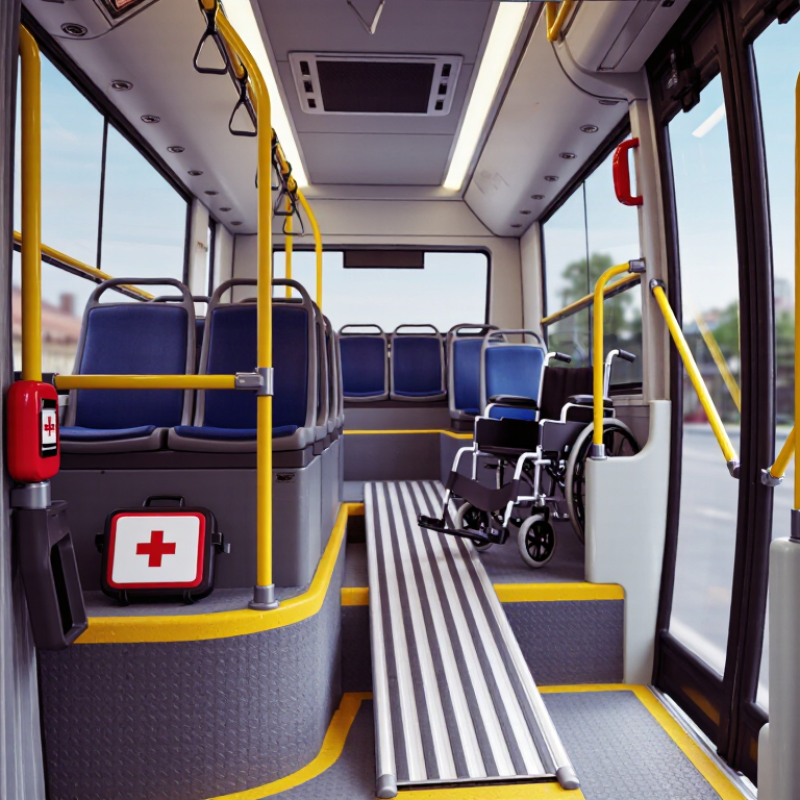
Essential Accessories For Community Transport Vehicles should support safe boarding, stable seating, clear communication, and comfortable travel. Useful equipment includes certified wheelchair ramps, non-slip flooring, contrasting step edges, grab rails, adjustable restraints, emergency hammers, first-aid kits, and easy-clean upholstery. A bright interior handrail can guide a passenger during evening boarding. A correctly positioned restraint can reduce movement on uneven roads. Small details matter.
Professor Graham Currie, a leading public transport researcher, has stated, “Accessibility is not an optional extra; it is a core service requirement.” That principle should guide every accessory decision. Operators must check passenger needs, vehicle dimensions, maintenance records, and staff training before installation. One accessory may suit a minibus but fail in a low-floor van. That is easy to overlook.
The WHO’s Global Report on Health Equity for Persons with Disabilities stresses inclusive systems and practical support. Yet equipment alone cannot guarantee dignity. Ramps require inspection. Straps need replacement. Drivers need confidence. A careful, evidence-led approach creates safer journeys, though no product solves every accessibility challenge. Feedback should remain part of the process.
2026 Top Essential Community Transport Vehicle Accessories
Understanding Community Transport Vehicles and Their Accessory Needs
Community transport vehicles serve varied passengers, routes, and mobility needs. Their accessories should match real journeys, not just vehicle size. A low-floor minibus may carry wheelchair users, older adults, and school groups. A volunteer car may mainly support short medical or shopping trips. Each vehicle needs a different balance of comfort, access, storage, and safety.
From practical vehicle checks, wide grab rails make boarding feel steadier. Bright step lighting helps during early morning and evening trips. Non-slip flooring is valuable when rainwater enters the vehicle. Foldable ramps should be light enough for drivers to handle safely. Wheelchair restraint systems must be compatible with the vehicle layout and maintained regularly. Seat-belt extenders can support passengers with limited movement. Keep first-aid supplies and fire safety equipment easy to reach. Small details matter.
Passenger information also deserves attention. Clear route displays, interior mirrors, and simple communication systems reduce confusion. Phone charging points can help passengers during longer journeys. However, electronic accessories should not distract drivers or expose private passenger data. I once underestimated how quickly loose bags could block an emergency exit. That mistake changed how I assess storage accessories. More equipment is not always better. Drivers need training, inspection records, and time to report damaged parts. Local accessibility requirements and the vehicle manufacturer’s instructions should guide every installation.
| Accessory | Primary Transport Need | Typical Vehicle Compatibility | Key Specifications or Performance Data | Recommended Inspection or Maintenance | Important Safety Considerations |
|---|---|---|---|---|---|
| Wheelchair Tie-Down and Occupant Restraint System | Secures a wheelchair and its passenger during acceleration, braking, and cornering. | Accessible vans, minibuses, and low-floor community transport vehicles with reinforced floor anchorage. | Usually includes four wheelchair tie-down points and a separate occupant lap-and-shoulder restraint. Capacity and geometry must match the wheelchair and occupant. | Check webbing, buckles, hooks, anchor bolts, and labels before every service. Replace damaged, contaminated, or impact-involved components immediately. | Do not rely on wheelchair brakes as vehicle restraints. Follow the system’s tested configuration and relevant requirements such as ISO 10542 where applicable. |
| Powered Wheelchair Ramp | Provides assisted boarding for manual or powered wheelchairs where a lift is unnecessary or unavailable. | Rear-entry or side-entry vans and minibuses with adequate door aperture and floor clearance. | Common designs use an electric motor, anti-slip deck, side edge protection, and a load rating commonly in the 300–400 kg range; verify the actual rating. | Clean the deck and hinges regularly; inspect cables, drive components, limit switches, emergency controls, and mounting hardware at least monthly for frequent-use fleets. | Use only on a stable, level surface within the permitted slope. Keep passengers clear of pinch points and never exceed the rated load. |
| Manual Folding Ramp | Offers a simple backup or low-cost boarding solution for occasional wheelchair access. | Cars, vans, and minibuses with suitable rear or side doors and secure storage space. | Typical lengths range from approximately 1.2 to 2.4 m. Longer ramps reduce slope but require more storage space and vehicle clearance. | Inspect hinges, locking pins, end plates, grip surface, and edge guards before each use. Keep the ramp dry, clean, and securely stored. | Confirm the ramp angle and load rating for each wheelchair. A trained attendant should control the chair on both ascent and descent. |
| Platform Wheelchair Lift | Lifts passengers and mobility devices vertically when a ramp would be too steep or space is limited. | Medium and large accessible vans, minibuses, and community buses with structural mounting capacity. | Typical platform widths are about 0.75–0.90 m, with load ratings commonly between 300 and 400 kg; exact dimensions vary by design. | Carry out daily visual checks and scheduled professional servicing. Test interlocks, platform barriers, hydraulic or electric systems, and emergency lowering controls. | Deploy only on firm, level ground. Platform gates and roll stops must be fully engaged before movement, and the passenger must remain restrained as required. |
| Retractable Step and Handrail | Improves safe entry for older adults and passengers with limited balance or leg strength. | Passenger vans, minibuses, and vehicles with relatively high step-in heights. | A useful step generally has a high-friction surface, rounded edges, visible contrast, and a height that reduces the initial climb without obstructing ground clearance. | Check step deployment, locking, anti-slip condition, corrosion, and handrail fasteners weekly in high-use operations. | The step must not deploy into traffic or interfere with a door, ramp, or lift. Keep the handrail available throughout boarding and alighting. |
| Low-Floor Boarding Modification | Reduces the vertical step and makes frequent boarding easier for people with reduced mobility. | Selected vans and minibuses designed for structurally approved floor or suspension modifications. | May include a lowered floor, modified suspension, kneeling function, or widened doorway. Available entry height depends on vehicle design and passenger configuration. | Inspect floor joints, door seals, suspension components, underbody protection, and ground clearance during scheduled vehicle servicing. | Structural changes must be professionally engineered and documented. Check that modified systems do not reduce crash protection or exhaust clearance. |
| Priority Seating and Flexible Passenger Seats | Allows the cabin to switch between standard passengers and wheelchair positions as demand changes. | Minibuses and multi-purpose vehicles with approved seat rails, quick-release mounts, or folding seats. | Seats should provide secure locking, appropriate belt anchorage, durable upholstery, and sufficient aisle clearance for boarding assistance. | Check locking indicators, seat frames, rails, belts, and upholstery weekly. Remove any seat that does not lock positively. | Never use a flexible seat as a wheelchair restraint point unless specifically designed and certified for that purpose. |
| Accessible Grab Rails and Interior Handholds | Provides stable support while passengers move through the entrance and aisle. | All community transport vehicles, particularly those carrying older adults or passengers with balance difficulties. | Should have high-contrast, easy-grip surfaces, rounded ends, secure structural attachment, and placement that avoids blocking the aisle. | Check for looseness, sharp edges, cracks, and worn grip surfaces during daily vehicle checks. | Handrails are support aids, not passenger restraints. They must be positioned so a passenger can maintain a stable three-point hold where practical. |
| High-Visibility Step and Edge Marking | Makes steps, ramps, platform edges, and door thresholds easier to identify in low light or for passengers with limited vision. | Any passenger vehicle with steps, ramps, raised thresholds, or contrasting interior zones. | Use durable, slip-resistant contrast strips or markings that remain visible after cleaning and normal foot traffic. | Inspect daily for peeling, fading, contamination, and loss of contrast; replace sections that no longer provide clear visual definition. | Markings should not create a trip edge or reduce the grip of a walking surface. |
| Interior Lighting and Door-Area Illumination | Improves visibility during boarding, seating, restraint use, and evening operations. | All community transport vehicles, especially those operating early morning, at night, or in sheltered pickup areas. | Lighting should cover steps, handholds, aisle routes, restraint points, and emergency exits without producing distracting glare. | Test during every vehicle start-up or daily check. Clean lenses and replace failed lamps or damaged wiring promptly. | Electrical installations must be fused, protected from abrasion, and routed away from moving ramps, lifts, and sharp edges. |
| Climate Control and Auxiliary Ventilation | Maintains a comfortable cabin temperature for passengers who may be sensitive to heat, cold, or poor airflow. | Vans and minibuses with high passenger turnover, wheelchair occupancy, or extended dwell times. | Rear or roof-mounted systems should distribute air throughout the passenger area and operate without blocking mobility equipment or emergency exits. | Service filters and refrigerant systems according to the vehicle schedule. Check vents, fan operation, condensation drains, and cabin temperature regularly. | Avoid directing strong airflow at passengers who may be medically sensitive. Do not obstruct ventilation or emergency-exit signage. |
| Passenger Communication and Stop-Request System | Enables passengers to request assistance or a stop without needing to move through the cabin. | Community buses, demand-responsive vehicles, and longer-route accessible vans. | Controls should be reachable from priority seats and wheelchair positions, with audible and visual confirmation where possible. | Test all buttons, indicator lights, speakers, and driver alerts before each operating shift. | Controls must not be hidden behind mobility equipment or installed where accidental activation is likely. |
| Portable Oxygen and Mobility-Aid Storage | Keeps walking frames, canes, folded wheelchairs, portable oxygen equipment, and personal items secure and accessible. | Vans and minibuses with unused luggage compartments or designated internal storage zones. | Storage should include positive retention, padded contact points, ventilation where required, and a load capacity suitable for the equipment carried. | Inspect straps, brackets, doors, ventilation openings, and floor attachments weekly. Keep storage areas free from loose objects. | Do not place equipment in aisles, beside emergency exits, or where it can become a projectile during sudden braking. |
| First-Aid Kit and Emergency Equipment Mount | Supports rapid response to minor injuries and helps crews locate emergency supplies quickly. | All community transport vehicles. | Equipment should be clearly marked, securely mounted, readily accessible, and appropriate to the service risk assessment. | Check contents, expiry dates, seals, fire extinguisher status, warning triangles, and emergency tools at least monthly and after every use. | Mount equipment where it cannot injure passengers and where it remains accessible after a minor collision or vehicle shutdown. |
| Exterior Passenger Information and Accessibility Signage | Communicates accessible entry points, priority areas, emergency information, and passenger instructions. | All community transport vehicles operating fixed, scheduled, or demand-responsive services. | Signs should use high contrast, clear wording, suitable symbols, weather-resistant materials, and placement visible from the boarding area. | Clean and inspect signage weekly; replace damaged, faded, peeling, or obstructed signs. | Information must remain accurate and must not obscure lamps, registration markings, windows, or emergency instructions. |
Use three-point seat belts, reinforced grab rails, non-slip flooring, and high-contrast step edges. Small details prevent hurried falls.
Install fold-out ramps or powered lifts, plus secure wheelchair restraints. Test belt tension before daily service. Improvised ties are unsafe.
Keep an emergency hammer, first-aid kit, and interior lighting within easy reach. Clear instructions reduce panic and mistakes.
Provide wide steps, reachable call buttons, visual stop indicators, and audible alerts. Keep the aisle completely clear.
Padded armrests, supportive cushions, adjustable headrests, and quiet ventilation can reduce discomfort. Passenger needs still differ.
Use labeled compartments, smooth edges, strong latches, and suitable load ratings. Secure walking frames and bags away from aisles.
Use simple stop-request controls, visible signals, interior speakers, and hands-free intercoms. Test sound from every seating position.
Check lifts, rails, straps, flooring, batteries, and controls regularly. A monthly checklist helps, but it can mislead us.
Older passengers, wheelchair users, and people with limited vision may notice problems staff miss. Record failed trials, not only successful checks.
Do not block walkways, overload storage, create loose charging cables, or make permanent changes without professional assessment. Popular features may still fail.
Community transport vehicles are designed to serve diverse passengers, including older adults, people with disabilities, and groups requiring additional support. Essential Accessories For Community Transport Vehicles help improve safety, accessibility, comfort, and daily usability. Key features may include secure passenger restraints, step supports, handrails, accessible ramps or lifts, protective flooring, and clear interior lighting. These additions can make boarding, traveling, and exiting safer while supporting a more inclusive experience for everyone.
Comfort and convenience are also important for longer journeys. Practical seating enhancements, climate control support, storage compartments, communication equipment, and mobility aid holders can help passengers and drivers travel with greater confidence. When selecting accessories, operators should consider vehicle layout, passenger needs, compatibility, and ease of use. Professional installation, routine inspections, and timely maintenance are essential to ensure each accessory remains secure, functional, and reliable. With thoughtful planning, the right equipment can improve service quality while creating a safer, more comfortable, and more welcoming community travel environment.

 Mingni Golf Carts