A first golf cart can feel almost maintenance-free. It is not. Dust collects around the battery tray, tire pressure drops, and a loose cable can turn a quiet ride into a frustrating one. The Golf Cart Care Guide For First Time Owners starts with small, repeatable checks—not complicated repairs.
The National Golf Foundation’s 2024 participation reporting counted about 28.1 million U.S. on-course golfers. That figure reflects a large, active golf community, though it does not measure cart ownership or maintenance needs. For practical battery advice, Isidor Buchmann, founder of Cadex Electronics and a battery-care specialist, has emphasized recharging lead-acid batteries after use. In plain-language paraphrase: “Recharge promptly, and avoid storing a lead-acid battery depleted.” Always check your cart maker’s manual, since charging and storage instructions vary by battery type.
Begin with the details you can see. Check tire pressure before a weekend round. Wipe mud from the floorboard, inspect cables for corrosion, and listen for unusual brake sounds. Small checks matter. Keep a simple log of service dates and battery charging; a phone note is enough. Not glamorous. But it helps.
New owners often miss one thing: clean-looking carts can still hide worn tires or loose connections. No checklist catches everything, either. Use this guide to build a steady routine, notice changes early, and ask a qualified technician when a problem feels beyond your experience. That is normal. The aim is not perfection; it is a cart that remains safe, reliable, and ready for the next ride.
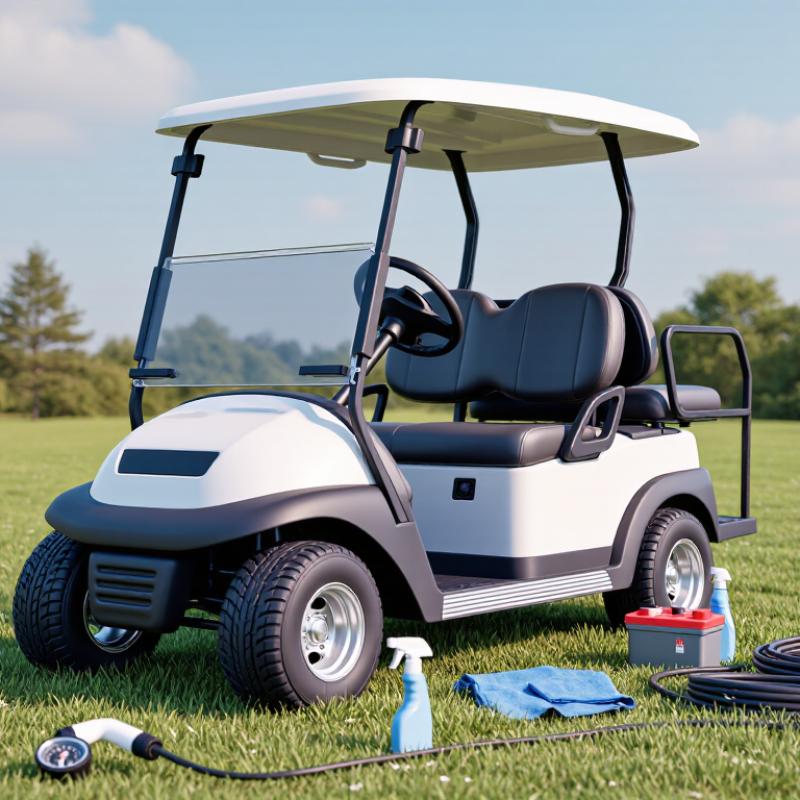
Before setting a maintenance calendar, learn what you own. Check the owner’s manual and record whether the cart is electric or gas-powered, its battery type, tire size, and recommended service intervals. These details change what routine care means. Keep the manual beside a simple logbook; note dates, mileage or hours, and unusual sounds. A soft brake pedal or a new click deserves attention, even if the cart still moves.
Use a quick walk-around before each ride. Look for low tires, loose wheel nuts, cracked lights, frayed cables, and leaks beneath the chassis. Test steering and brakes at walking speed in a clear area. It takes minutes. For electric carts, inspect charging leads and keep battery tops clean and dry. Add distilled water only to serviceable lead-acid batteries, following the manual; lithium batteries do not need watering. For gas carts, follow the specified engine-oil and fuel-system service intervals.
Set reminders based on use, not just the calendar. A cart driven daily over rough paths may need checks sooner than one used twice a month on smooth fairways. At seasonal storage, follow the maker’s instructions for charging, fuel, and tire support. I would not guess at service intervals: generic online schedules can miss model-specific details. That is an easy mistake to make. For repairs involving brakes, steering, or high-voltage components, ask a qualified technician to inspect the cart.
Know your golf cart and build a consistent maintenance routine. This chart shows a general planning guide; check your owner’s manual for the schedule specific to your cart and battery type.
Intervals are general estimates, not universal requirements. Check tire pressure weekly. Check battery water monthly only for flooded lead-acid batteries, and use distilled water as directed by the manual. Have brakes and the cart inspected on the schedule recommended by its manufacturer.
Before each ride, park on level ground and inspect every tire. Look for cuts, bulges, embedded stones, and uneven tread wear. Check pressure against the vehicle manual or tire label; a tire can look firm and still be underinflated. A brief check matters.
The U.S. Consumer Product Safety Commission’s report Golf Cart-Related Injuries and Deaths, 2007–2017 estimated 156,040 golf-cart-related injuries treated in emergency departments during that period. That figure does not prove inspections prevent every injury, but it shows why routine care deserves attention.
Test the brakes at walking speed in a clear area. The pedal should feel firm, and the cart should stop without pulling or grinding. Check the parking brake before leaving. Look closely. Switch on headlights, brake lights, and turn signals, then ask someone to confirm they work if visibility is poor. Wipe away dust or mud covering lenses. Replace a cracked lens promptly.
With the cart stationary, turn the steering wheel gently and check for unusual looseness. Test the horn, accelerator, and direction selector, then make sure the selector clicks fully into place. Keep hands and shoes clear of moving parts. The easy part is remembering the checklist; the harder part is not rushing it when you are late. If a control feels inconsistent, pause the ride and consult the owner’s manual or a qualified technician.
A golf cart battery works best when it stays charged, secure, and clean. Check it before a long ride, especially after the cart has sat unused. Look for cracked cases, loose cables, white or greenish buildup, and signs of leakage. Small details matter. Battery types differ, so follow the care instructions for your specific system. Only add distilled water to serviceable flooded batteries, and never fill above the marked level.
Switch the cart off and remove the key before inspecting electrical connections. Wear eye protection, and keep metal tools from touching both battery terminals at once. Use a battery-safe brush to remove corrosion; don’t let cleaning liquid enter battery cells or wiring plugs. Rinse only as directed by the battery instructions, then dry the area thoroughly. I used to think a quick wipe was enough, but damp residue can hide under a cable lug.
Check that each connection feels secure, without forcing it tighter than the specified torque. A loose terminal can cause intermittent power, while an overtightened one may damage the post. Keep connector surfaces clean and dry; apply protective products only where the manufacturer recommends them. If a cable is frayed, a case is swollen, or corrosion returns quickly, stop and ask a qualified technician to inspect it. That extra check can feel fussy, but guessing around battery faults is rarely worth it.
| Care Task | How Often | What to Do | Important Safety Notes |
|---|---|---|---|
| Inspect the battery area | Before each use; more often in heavy-use conditions | Look for loose cables, corrosion, cracks, leaks, swelling, or unusual odors. Keep the battery compartment clear of debris. | Do not use a cart with a damaged or leaking battery. Follow the cart and battery manuals for inspection procedures. |
| Recharge after use | After each use, or according to the battery maker’s instructions | Use a charger that is compatible with the cart’s battery type and voltage. Allow the charging cycle to finish rather than repeatedly interrupting it. | Charge in a well-ventilated area. Keep sparks, flames, and smoking materials away from charging batteries. |
| Check water level in flooded lead-acid batteries | About monthly, and more frequently in hot weather or with heavy use | When fully charged, check that electrolyte covers the plates. Add distilled water as directed by the battery manufacturer. | Never add water to sealed batteries. Wear eye protection and gloves; battery electrolyte is corrosive. |
| Clean battery terminals and cable connections | Inspect monthly; clean when corrosion or buildup is present | Switch off the cart and charger. Clean corrosion with a battery-safe method recommended by the manufacturer, then dry the area and reconnect securely. | Use insulated tools and avoid bridging terminals with metal. If unsure about disconnecting cables, ask a qualified technician. |
| Check cable tightness and condition | Monthly and whenever the cart shows intermittent power | Look for frayed insulation, cracked cable jackets, heat discoloration, or loose connections. Replace damaged cables with correctly rated parts. | Do not tighten or handle live connections. Disconnect power only as directed in the owner’s manual. |
| Clean the battery compartment | Every one to three months, or when dirt or moisture accumulates | Remove loose dirt with a dry cloth or brush. Keep water and cleaning products away from electrical components and battery vents. | Do not spray the battery compartment with a hose or pressure washer. |
| Prepare for extended storage | Whenever the cart will be unused for several weeks or longer | Follow the battery maker’s storage guidance. Store batteries within the recommended charge range and check charge periodically if required. | Charging and storage requirements differ between lead-acid and lithium batteries. Do not assume one battery type’s procedure applies to another. |
| Arrange a professional battery check | At least annually, or sooner if range or performance declines | Ask a qualified technician to check battery condition, charging performance, and electrical connections. | Stop using the cart and seek service if batteries become unusually hot, emit a strong odor, or show visible damage. |
A clean golf cart is easier to inspect and more comfortable to use. Park it in the shade and let hot surfaces cool before washing. Rinse loose grit away with a gentle stream; strong pressure can push water into electrical connections, bearings, or seat seams. Use a soft sponge and mild soap, working from the roof downward. Keep it gentle.
Rinse the body thoroughly so soap does not dry into streaks. For stubborn marks, soak them briefly rather than scraping with a rough pad. Clean seats with a product suited to their material, and test it on a hidden spot first. Avoid soaking cushions. Water trapped in seams can encourage mildew, especially when the cart is stored in a closed space. Dry the seams.
Wipe the frame and lower panels with a damp cloth, where mud and grass collect around joints. A soft brush can lift packed dirt without scratching the finish. Check the owner’s manual before applying wax or protectant; some coatings may not suit every surface. Dry metal parts with a clean towel, then look for chipped paint or fresh rust. It is tempting to skip the underside, but that is where missed grit often hides. A quick final check can catch it.
Before storing a golf cart, choose a dry, well-ventilated space away from direct sun and standing water. Wash off dirt and grass, then dry the body and seats fully. Moisture trapped under a cover can leave stains or encourage corrosion. Check tire pressure and look for cracks, worn tread, or slow leaks. Small leaks matter. Use the owner’s manual for battery storage instructions; battery types need different care. Keep charging equipment and cables clean, dry, and arranged safely. If the cart will sit for weeks, ask a qualified technician how to prepare its battery and fuel system. I still find this easy to overlook: a quick walkaround can reveal a damp floor or a loose cable before storage.
Set professional servicing around the manual’s intervals, and book sooner if the cart feels different. A technician can inspect brakes, steering, suspension, tires, lights, and electrical connections. Gas-powered carts also need checks for engine oil, fuel lines, and filters. Ask for a written record of work and any parts that may need attention later. That takes minutes. Describe specific symptoms, such as a longer stopping distance, a pull to one side, or a clicking sound when turning. Don’t wait for a seasonal appointment if braking or steering seems unsafe; park the cart and arrange an inspection. Service timing can vary with terrain, weather, and how often you drive, so heavy use may call for more frequent checks.
Look for cracked battery cases, loose cables, corrosion, and leaks. Check the cart after it has been unused.
Switch off the cart and remove the key. Wear eye protection, and keep metal tools away from both terminals at once.
Stop using the cart and ask a qualified technician to inspect frayed cables, swollen cases, or recurring corrosion. Don’t guess.
Rinse away grit with a gentle stream. Use mild soap and a soft sponge, working from the roof downward.
Avoid soaking the cushions, and dry the seams thoroughly. Water can hide there.
Choose a dry, ventilated space away from direct sun and standing water. Check tire pressure and look for cracks or slow leaks.
Follow the manual because battery types need different care. I still miss spots. Check for damp floors and loose cables.
Follow the manual’s service intervals, or book sooner if the cart feels different. Describe symptoms like longer stopping distance or clicking while turning.
This Golf Cart Care Guide For First Time Owners explains how simple, regular attention can help keep a golf cart safe, comfortable, and dependable. Start by learning your cart’s features and following its maintenance schedule. Before every ride, check the tires for wear and proper inflation, test the brakes, and confirm that the lights and controls work as expected. These quick inspections can help you notice small problems before they become bigger concerns.
Battery care is also essential: follow the manufacturer’s charging guidance and keep electrical connections clean and secure. Wash the cart regularly, use suitable products to protect its seats and body, and check the frame for dirt or signs of wear. If the cart will be stored for an extended period, prepare it according to its care instructions. Schedule professional servicing when needed to maintain its key systems and address issues you may not be equipped to inspect yourself.

Mingni Golf Carts