In 2026, utility vehicles are no longer one-size-fits-all machines. They serve farms, construction sites, parks, campuses, emergency teams, and remote maintenance crews. Each environment demands different carrying capacity, traction, range, visibility, and operator protection. This is why How To Customize Utility Vehicles For Different Needs should begin with the work, not the showroom brochure.
Recent industry research supports this practical shift. The International Energy Agency’s Global EV Outlook highlights continued electrification across road transport and stronger interest in efficient fleet operations. Grand View Research also identifies expanding demand for utility terrain vehicles in agriculture, construction, recreation, and commercial applications. These reports point toward a clear direction: buyers increasingly value purpose-built performance and measurable operating costs. Still, market forecasts can sound cleaner than real job sites. Mud remains mud.
Fleet-management analyst Mike Antich has repeatedly stressed the importance of matching vehicles to operational requirements. His guiding statement is: “The right vehicle must fit the mission, the route, and the total cost.” That principle applies to every customization decision. A grounds team may need quiet electric drive, lockable tool storage, and narrow turning clearance. A construction crew may prioritize a reinforced bed, high ground clearance, winch capacity, and all-weather tires. A utility contractor might require modular racks, auxiliary power, and serviceable batteries.
The strongest designs are not always the most expensive. They are the easiest to use, maintain, and justify. Buyers should test payload balance, charging access, suspension behavior, and driver visibility before ordering. Some assumptions will fail. That is useful. Real-world testing reveals what specifications alone cannot.
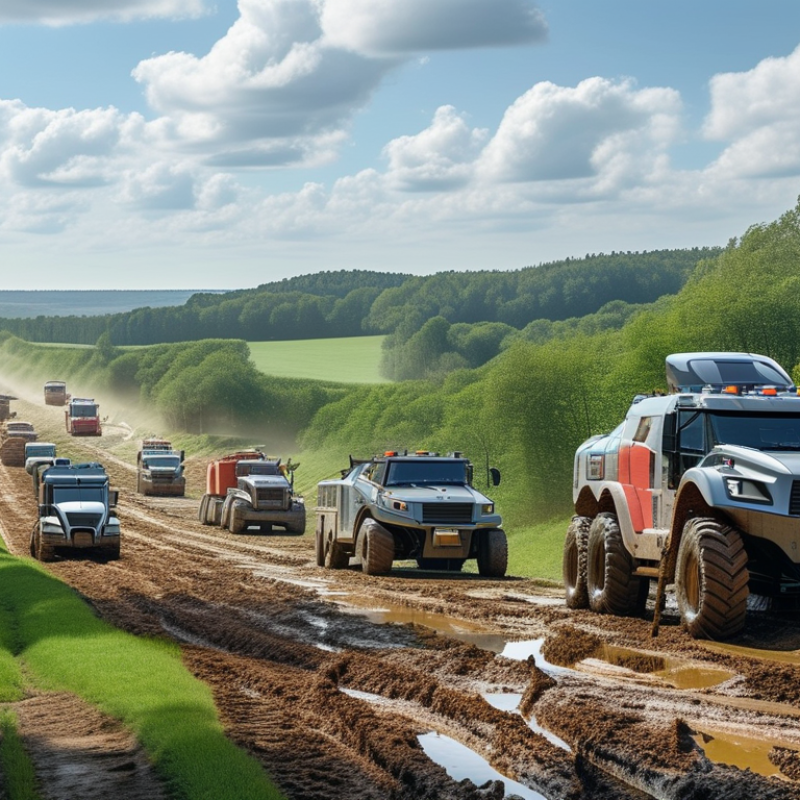
The 2026 utility vehicle market is divided by purpose, not appearance. Compact models suit gardens, campuses, and narrow service roads. Larger work vehicles support construction, farming, and municipal maintenance. Passenger-focused versions carry teams safely, while cargo versions prioritize tools and equipment. Each category creates different customization priorities.
Start with the daily route and the real payload. A vehicle carrying irrigation pumps needs secure storage, washable flooring, and protected electrical connections. A maintenance crew may need roof racks, interior lighting, and lockable drawers. Remote users should consider all-terrain tires, underbody protection, recovery points, and additional cooling capacity. Electric utility vehicles can reduce routine noise and local emissions, but charging access must match the work schedule. Range estimates can fall sharply with heavy loads, cold weather, or steep ground.
Measure before modifying. Added equipment changes axle loads, braking distance, visibility, and turning behavior. A higher suspension may improve clearance, yet it can reduce stability during cornering. Oversized tires may look useful but can increase energy use and steering effort. Customization should follow verified payload limits and professional installation guidance. Weather sealing also deserves attention; one poorly protected connector can stop an entire workday. No setup is perfect. Needs change, and early assumptions are sometimes wrong. A short trial on familiar ground can reveal uncomfortable seating, awkward tool access, or insufficient ground clearance before those problems become expensive.
| Vehicle Category | Typical Seating | Powertrain Options | Typical Payload Capacity | Towing Capability | Typical Range or Working Time | Best Use Cases | Recommended Customization | Terrain Suitability | Purchase Priority |
|---|---|---|---|---|---|---|---|---|---|
| Compact Electric Utility Cart | 2–4 occupants | Battery-electric | 250–500 kg | 350–750 kg | 50–100 km per charge, depending on load and terrain | Campuses, resorts, warehouses, parks, gated communities, and short-distance maintenance | Flatbed, lockable cargo box, rear seats, weather enclosure, lights, warning beacon, and tool storage | Level pavement, paved paths, compact gravel, and maintained grounds | Low operating cost |
| Mid-Size Electric Utility Vehicle | 2–6 occupants | Battery-electric | 500–900 kg | 750–1,500 kg | 70–140 km per charge, depending on battery size and duty cycle | Municipal services, facility operations, agriculture, and urban delivery routes | Tipper bed, hydraulic lift, enclosed cab, all-weather doors, auxiliary power, and charging package | Roads, gravel roads, grass, farms, and moderate slopes | Balanced versatility |
| Compact Utility Side-by-Side | 2 occupants | Gasoline, diesel, or battery-electric | 350–700 kg | 450–900 kg | Approximately 100–250 km per fuel tank or 50–120 km per charge | Property maintenance, hunting access, landscaping, and light agricultural work | Winch, protective roof, windshield, cargo bed, brush guard, suspension upgrade, and spray system | Gravel, mud, grass, forest trails, and uneven ground | Strong maneuverability |
| Four-Seat Utility Side-by-Side | 4 occupants | Gasoline, diesel, or battery-electric | 400–800 kg | 600–1,000 kg | Approximately 100–240 km per fuel tank or 50–110 km per charge | Large properties, work crews, emergency response, utilities, and outdoor recreation | Extended cab, fold-down rear seats, medical kit, communications equipment, cargo racks, and recovery gear | Mixed terrain, steep trails, fields, and rough work sites | High crew flexibility |
| Heavy-Duty Utility Side-by-Side | 2–6 occupants | Diesel, gasoline, or high-capacity battery-electric | 700–1,200 kg | 1,000–1,600 kg | Approximately 150–300 km per fuel tank or 70–150 km per charge | Construction sites, forestry, agriculture, snow operations, and heavy maintenance | Hydraulic dump bed, heavy winch, power take-off equipment, plow, sprayer, reinforced suspension, and service body | Rough terrain, mud, slopes, snow, and unpaved work areas | Maximum work capacity |
| Light-Duty Pickup Utility Vehicle | 2–6 occupants | Gasoline, diesel, hybrid, or battery-electric | 700–1,200 kg | 1,800–3,600 kg | Approximately 450–800 km per fuel tank or 250–500 km per charge | Contracting, regional service work, equipment transport, and mixed personal-work use | Service body, ladder rack, tonneau cover, utility trailer package, inverter, toolbox, and onboard power outlets | Roads, highways, gravel roads, and moderate off-road conditions | Best road capability |
| Medium-Duty Work Truck | 2–6 occupants | Diesel, hybrid, or battery-electric | 1,500–4,500 kg | 3,600–9,000 kg | Approximately 400–800 km per fuel tank or 200–450 km per charge | Municipal fleets, construction, landscaping, waste services, and regional freight | Box body, flatbed, crane, refrigerated body, utility body, liftgate, snow equipment, or water tank | Public roads, industrial sites, construction areas, and maintained unpaved roads | Highest payload potential |
| Compact Cargo Van | 2–3 occupants | Gasoline, diesel, hybrid, or battery-electric | 500–1,000 kg | 750–1,500 kg | Approximately 350–700 km per fuel tank or 200–400 km per charge | Urban delivery, mobile repair, catering, service calls, and small-business logistics | Modular shelving, drawer systems, refrigeration, partition wall, roof rack, inverter, and mobile workstation | Urban roads, highways, paved industrial areas, and light gravel | Best cargo organization |
| All-Terrain Rescue Utility Vehicle | 2–6 occupants | Gasoline, diesel, or battery-electric | 400–1,000 kg | 600–1,500 kg | Approximately 100–250 km per fuel tank or 50–130 km per charge | Wildland response, search and rescue, disaster relief, remote medical support, and evacuation | High-clearance suspension, recovery winch, stretcher mount, emergency lighting, radio system, water tank, and medical storage | Flooded areas, mud, snow, forest trails, steep slopes, and damaged roads | Best emergency access |
| Agricultural Utility Tractor | 1–2 occupants | Diesel or battery-electric | 1,000–3,000 kg implement or ballast capacity | Varies by drawbar configuration | Approximately 6–12 operating hours per fuel tank or 4–10 hours per charge | Tillage, mowing, loading, planting, material handling, and field maintenance | Three-point hitch, front loader, power take-off, hydraulic remotes, cab climate control, and precision guidance | Fields, slopes, soil, grass, mud, and uneven agricultural ground | Best implement compatibility |
| Industrial Tow Tractor | 1–2 occupants | Battery-electric or internal-combustion engine | Uses tow rating rather than a conventional cargo payload | 2,000–15,000 kg | Approximately 6–12 operating hours per charge or fuel cycle | Factories, airports, warehouses, distribution centers, and baggage or parts handling | Automatic hitch, tow package, operator canopy, safety sensors, fleet telematics, beacon, and weather protection | Level concrete, asphalt, loading yards, and controlled industrial surfaces | Best repetitive towing |
| Snow and Grounds Maintenance Vehicle | 1–4 occupants | Gasoline, diesel, or battery-electric | 300–1,000 kg | 450–1,500 kg | Approximately 4–10 operating hours per fuel tank or 3–8 hours per charge | Roadside maintenance, campus operations, snow clearing, parks, and public-space management | Snowplow, spreader, rotary broom, mower, vacuum system, water tank, and interchangeable front attachments | Snow, grass, pavement, gravel, and maintained public grounds | Best seasonal adaptability |
Drive it on gravel, slopes, wet grass, and uneven loading areas. Test acceleration, braking, turning, clearance, and suspension control. Real conditions may reduce published capacity.
Compare payload and towing figures with official documents. Test the vehicle using realistic tools and weights. Do not rely only on impressive advertisements.
List three typical jobs and one difficult job. Measure the cargo bed, storage areas, and passenger space with actual equipment. Extra size can create unnecessary bulk.
Sit inside for twenty minutes before deciding. Check seat adjustment, step height, vibration, visibility, and weather protection. Long shifts reveal small problems.
Choose clear cameras, simple navigation, service alerts, and durable controls. Technology should support attention. A crowded interface may become tiring.
Use threaded mounting points for removable drawers, cases, or seats. Keep heavy equipment low and near the centerline. This reduces shifting during sharp turns.
Include three-point restraints, visible emergency lighting, a first-aid kit, and fire protection equipment. Use load-rated tie-downs and an anchored cargo barrier. Improvised straps can fail during sudden braking.
Keep frequently used tools between waist and shoulder height. Maintain clear access to doors, exits, and controls. Use textured flooring where floors become wet.
Yes, spare capacity can prevent later clutter. However, overbuilding adds weight and may reduce efficiency. My ideal layout would still need revision after daily use.
Choosing the right utility vehicle in 2026 begins with understanding how different categories serve different purposes, from daily transportation and family travel to demanding work, outdoor recreation, and specialized hauling. This guide explains How To Customize Utility Vehicles For Different Needs by evaluating essential factors such as performance, cargo capacity, passenger comfort, technology, fuel efficiency, and operating conditions. Buyers can identify which features matter most before investing in upgrades.
Customization may include modular storage, adjustable seating, protective equipment, improved lighting, communication tools, climate control, and practical interior layouts. Work-focused users may prioritize durability and organization, while families may value comfort, safety, and flexible space. Recreational users can benefit from weather-resistant storage and adaptable cargo solutions. The article also emphasizes planning upgrades carefully, selecting appropriate safety equipment, and balancing initial costs with maintenance requirements, reliability, resale potential, and long-term value. A thoughtful approach ensures the vehicle remains useful, safe, and adaptable as needs change.

 Mingni Golf Carts